- Why Is Energy Efficiency Becoming an Essential Requirement for Cleanrooms?
- What Is ESG, and How Is It Related to Cleanroom Operations?
- Why Do Cleanrooms Consume More Energy Than Conventional Production Areas?
- HVAC Is at the Center of the Cleanroom Energy-Efficiency Strategy
- How Do FFUs, HEPA Filters, and Airflow Design Affect Energy Consumption?
- Can Cleanrooms Reduce Airflow When Production Is Stopped?
- Sensors, BMS, and AI Can Help Cleanrooms Use Energy According to Actual Demand
- Should Energy-Efficient Cleanroom Design Begin with CAPEX or OPEX?
- Priority Energy-Saving Measures for New and Existing Cleanrooms
- Energy-Efficient Cleanrooms in Vietnam: From an ESG Trend to a Competitive Advantage
- Frequently Asked Questions About Energy-Efficient Cleanrooms
- Why do cleanrooms consume so much electricity?
- Is HVAC the largest energy-consuming system in a cleanroom?
- Does a higher ACH always mean a better cleanroom?
- Can ACH be reduced to save electricity?
- Can FFU speed be reduced at night?
- What is Setback Mode in a cleanroom?
- Can FFUs with EC motors save energy?
- Does a HEPA filter affect energy consumption?
- Does increasing HEPA differential pressure increase fan energy consumption?
- Should a HEPA filter be replaced immediately when differential pressure rises?
- How can a BMS help save cleanroom energy?
- Can AI optimize cleanroom energy consumption?
- Can GMP cleanrooms use energy-saving strategies?
- Does saving energy reduce cleanroom classification?
- Can older cleanrooms be upgraded for better energy efficiency?
- What is the difference between CAPEX and OPEX in cleanroom investment?
- How is ESG related to cleanrooms?
- How does Net Zero affect cleanroom design?
- Which cleanroom systems have the greatest impact on electricity consumption?
- Where should factories in Vietnam begin when optimizing cleanroom energy consumption?
- Selecting the Right Equipment from the Beginning for an Energy-Efficient Cleanroom
Cleanrooms are among the most energy-intensive areas in many manufacturing facilities because HVAC systems, AHUs, FFUs, HEPA filtration, temperature, humidity, and differential pressure often need to be maintained continuously. As energy costs rise and ESG becomes an increasingly important part of corporate sustainability strategies, the cleanroom challenge can no longer stop at simply “achieving cleanliness.” The goal must also be to maintain the required environmental conditions with the most reasonable level of energy consumption.
Why Is Energy Efficiency Becoming an Essential Requirement for Cleanrooms?
For many years, the primary objective in cleanroom design was to achieve the required cleanliness classification, maintain stable temperature, humidity, and differential pressure, and create an environment suitable for the manufacturing process. When a project required ISO Class 7, ISO Class 8, or a specific GMP area, engineers often prioritized providing sufficient airflow together with a relatively large safety margin to ensure that the system would pass qualification.
This approach helps reduce the risk of insufficient capacity, but it can create another consequence: systems may be designed larger than necessary and then operate with excess capacity for many years.
An oversized AHU requires more electricity for fans, chillers, and dehumidification. A room operating at an unnecessarily high number of air changes per hour forces the entire HVAC system to work harder. Hundreds of FFUs running at maximum speed when actual conditions do not require that airflow can consume a substantial amount of electricity.
As energy prices, emission-reduction requirements, and pressure to optimize manufacturing costs all increase, cleanroom design philosophy must also change. A factory should no longer ask only whether the system can achieve the required ISO Class. It should also ask:
How much energy are we using to achieve that cleanliness level, and can we maintain the same level of environmental control with less energy?
This is the starting point of the Energy-Efficient Cleanroom.
An energy-efficient cleanroom does not mean reducing fan speed as much as possible, minimizing airflow at all times, or switching off HVAC whenever possible. Instead, it means designing the system to use the appropriate amount of energy for each operating condition.
During production, the system provides sufficient environmental conditions for the process.
When production is stopped, the system may move into a reduced-load operating mode if the risk assessment allows it.
When the load changes, airflow and system capacity may change accordingly.
This philosophy creates a direct connection between cleanrooms, energy efficiency, and ESG. Energy is no longer only an engineering-department concern. It becomes part of the company's operating strategy and long-term sustainability agenda.
What Is ESG, and How Is It Related to Cleanroom Operations?
ESG – Environmental, Social and Governance is a framework used to evaluate corporate sustainability across three broad dimensions.
Environmental relates to energy consumption, greenhouse-gas emissions, water use, waste, natural resources, and the environmental impact of production activities.
Social relates to employees, health and safety, communities, and broader social factors.
Governance relates to how a company is managed, how risks are controlled, how decisions are made, and how transparency is maintained.
For cleanrooms, the most direct connection is usually the Environmental component. An HVAC system operating 24 hours a day, hundreds of continuously running FFUs, chillers maintaining cooling loads, and dehumidification systems can create significant electricity consumption across the entire life of a facility.
If electricity generation still relies partly on fossil fuels, this energy consumption is also indirectly connected to the company's Carbon Footprint.
Therefore, when a corporation sets targets to reduce emissions, lower energy intensity, or move toward Net Zero, cleanroom systems cannot remain outside the plan.
An electronics factory with thousands of FFUs cannot meet its energy targets simply by replacing office lights with LEDs. Likewise, a pharmaceutical factory with HVAC operating continuously cannot significantly optimize total electricity consumption while ignoring its AHUs, chillers, fresh-air systems, and cleanrooms.
Cleanrooms therefore become one of the priority areas when companies develop a Decarbonization strategy.
The important point is that ESG does not mean sacrificing quality to save electricity.
In pharmaceuticals, medical devices, semiconductors, and electronics, product requirements must always come first. ACH should not be reduced and FFUs should not be switched off if doing so weakens environmental control.
The correct approach is to find an operating point where product quality remains protected while unnecessary energy consumption is eliminated.
This is fundamentally different from energy saving in the conventional sense. In cleanrooms, energy efficiency must be implemented together with engineering, risk assessment, and validation.
Why Do Cleanrooms Consume More Energy Than Conventional Production Areas?
A conventional office typically needs to maintain comfortable temperature conditions and provide an appropriate amount of fresh air.
A cleanroom must perform many more tasks.
The air must be filtered.
Particles must be controlled.
Temperature must remain stable.
Humidity must stay within specified limits.
Differential pressure must be maintained.
Air may need to be recirculated many times per hour.
In some processes, the amount of fresh air or exhaust air may also be very high.
All of these requirements create an energy load.
One commonly discussed parameter is ACH – Air Changes per Hour, which represents the amount of air supplied to a room in one hour relative to the room volume.
When ACH increases, fans must move more air. That air must also pass through coils, filters, ductwork, HEPA filters, and other components that create resistance.
As a result, increasing ACH generally increases energy consumption.
However, a higher ACH does not automatically mean a better cleanroom.
If an area requires only a certain airflow rate to control particles but the system is designed far above that requirement, the additional energy may produce little corresponding value.
This is one of the areas where design philosophy needs to change.
Fresh air is another major energy factor. Outdoor air must be conditioned before it enters the cleanroom. In a hot and humid climate such as Vietnam, this is particularly important.
During summer, outdoor air can have both high temperature and high humidity. When large amounts of fresh air are introduced into the system, the AHU must cool and dehumidify that air. In some configurations, reheating may then be required to achieve the target temperature.
If more fresh air is supplied than is actually required, energy costs can rise significantly.
Differential pressure also consumes energy. To maintain a pressure cascade between rooms, the system must precisely balance supply, return, and exhaust airflow.
Air leakage through doors, gaps, or poorly sealed areas forces the fans to compensate continuously.
A room with poor airtightness is therefore not only difficult to control from a pressure perspective; it also consumes more energy.
HEPA filters also create pressure drop. As filters collect dust, resistance increases and fans must generate greater pressure to maintain airflow.
This shows that cleanroom energy consumption does not come from a single piece of equipment. It is the combined result of HVAC design, ACH, fresh air, differential pressure, filtration, airtightness, temperature and humidity requirements, and the way the system is operated.
To reduce energy effectively, the entire system must be considered rather than focusing on only one or two devices.
HVAC Is at the Center of the Cleanroom Energy-Efficiency Strategy
HVAC – Heating, Ventilation and Air Conditioning is often at the center of cleanroom energy consumption.
HVAC is responsible for supplying air, filtering air, and maintaining temperature, humidity, and differential pressure. As a result, almost every change in environmental requirements has a direct or indirect impact on HVAC energy consumption.
One of the largest opportunities is airflow optimization.
In many older systems, fans operate at fixed speeds. When airflow needs to be reduced, valves or dampers are partially closed.
This is similar to pressing the accelerator and the brake at the same time. The motor continues producing power, but part of that energy is wasted overcoming artificial resistance.
A VFD – Variable Frequency Drive helps solve this problem by adjusting motor speed according to actual demand.
Because of fan performance characteristics, reducing fan speed can result in a significant reduction in power consumption. Instead of operating continuously at maximum speed, the fan can be adjusted to match the required airflow.
Similarly, VAV – Variable Air Volume systems allow the amount of air supplied to individual areas to be adjusted.
If a room is temporarily unused, airflow may be reduced to a previously determined safe level instead of maintaining full-production conditions.
However, HVAC optimization should never begin by arbitrarily reducing fan speed.
Engineers first need to determine which parameters actually control environmental performance.
If particle concentration is the primary concern, the relationship between ACH and particle concentration should be evaluated.
If differential pressure is critical, the system must continue maintaining the required pressure cascade.
If the product is sensitive to humidity, reducing airflow could affect the ability to maintain RH – Relative Humidity.
An effective strategy therefore usually begins with measurement.
Measure actual airflow.
Measure particle concentration.
Monitor differential pressure.
Analyze temperature and humidity.
Only then determine the optimal operating point.
Another area with significant energy-saving potential is heat recovery. In systems with large exhaust-air volumes, part of the energy contained in the exhaust air may be recovered to help condition incoming fresh air, provided that the design and contamination-control requirements allow it.
In pharmaceutical cleanrooms or areas handling hazardous active substances, heat recovery must be evaluated carefully to prevent cross-contamination risks.
Not every energy-saving solution is suitable for every system.
That leads to an important principle:
Energy optimization must always remain within the boundaries of safety, GMP, and contamination control.
How Do FFUs, HEPA Filters, and Airflow Design Affect Energy Consumption?
In electronics, semiconductor, and other high-cleanliness environments, FFUs – Fan Filter Units may account for a significant share of total cleanroom energy consumption.
A cleanroom may contain dozens, hundreds, or even thousands of FFUs. If each unit differs by only a small amount in electrical power, that difference becomes significant when multiplied by the number of units and thousands of operating hours per year.
Selecting efficient motors and fans is therefore an important engineering decision.
FFUs using EC Motors – Electronically Commutated Motors are often considered because they offer good energy efficiency and flexible speed control across a broad operating range.
But the motor is not the only factor.
HEPA filters directly affect fan power as well.
Air must pass through the filter media, creating resistance. If a filter has a high pressure drop, the motor needs to generate greater pressure to maintain the same airflow.
Therefore, when selecting a HEPA filter, companies should not consider only the filtration class, such as H13 or H14. Filtration efficiency is mandatory, but filter resistance must also be considered.
A filter with a lower initial pressure drop while still meeting the required filtration efficiency may reduce energy consumption throughout its operating life.
However, filters should not be selected solely because they have the lowest pressure drop. Filter-media construction, filtration area, mechanical durability, airflow capacity, and manufacturing quality remain important.
Airflow design also has a major influence on energy consumption.
If FFUs are poorly positioned, some areas may receive excessive airflow while others receive too little. The common response may then be to increase the speed of the entire system, increasing energy use without solving the root cause.
A well-designed system delivers airflow where it is actually needed.
For large cleanrooms, zoning can make system operation more flexible. Instead of controlling hundreds of FFUs as one group, different zones can be adjusted according to their production status.
This forms the basis of Demand-Based Control.
When particle load increases, the system can increase airflow.
When the load decreases, fan speed can be reduced.
When a zone is not in production, FFUs may operate in setback mode if technical conditions allow.
This changes the FFU from a fixed-output device into part of an intelligent energy-management system.
Can Cleanrooms Reduce Airflow When Production Is Stopped?
This is one of the most important questions in cleanroom energy efficiency.
The answer is that in many cases it may be possible, but it should never be applied mechanically.
Setback Mode is an operating strategy that reduces airflow, fan speed, or certain operating parameters during periods when the cleanroom is not in full production.
For example, a factory may operate production from 8:00 a.m. to 8:00 p.m., while its HVAC system and FFUs continue running at 100% capacity 24 hours a day.
If quality requirements and risk assessment allow it, the non-production period may be operated at a reduced load.
The important point is that reduced load does not mean switched off.
The room may still need to maintain essential conditions to avoid losing control.
The pressure cascade may still need to be maintained.
Temperature and humidity may still need to remain within defined ranges.
The cleanliness level should not deteriorate to the point where recovery before production takes too long.
Therefore, before implementing setback mode, the cleanroom's Recovery Time must be determined.
If airflow is reduced overnight, the company must know how long it takes for the room to return to production conditions after fan speeds are increased.
For example, if the room requires 20 minutes to recover and production begins at 8:00 a.m., the system can automatically return to production mode before employees enter the room.
This allows energy consumption to follow the actual operating schedule.
However, in sterile areas or processes subject to stringent GMP requirements, changing HVAC operating conditions must be evaluated much more carefully.
The same strategy should not automatically be applied to electronics cleanrooms, pharmaceutical cleanrooms, and food-industry cleanrooms.
The correct statement is not:
“Cleanrooms should reduce ACH at night.”
The correct statement is:
“Each cleanroom should be evaluated to determine whether ACH can safely be reduced during non-production periods.”
That is the difference between controlled energy optimization and intuitive energy saving.
Sensors, BMS, and AI Can Help Cleanrooms Use Energy According to Actual Demand
A system can only be optimized if it knows how it is operating.
For that reason, sensors form the foundation of an energy-efficient cleanroom.
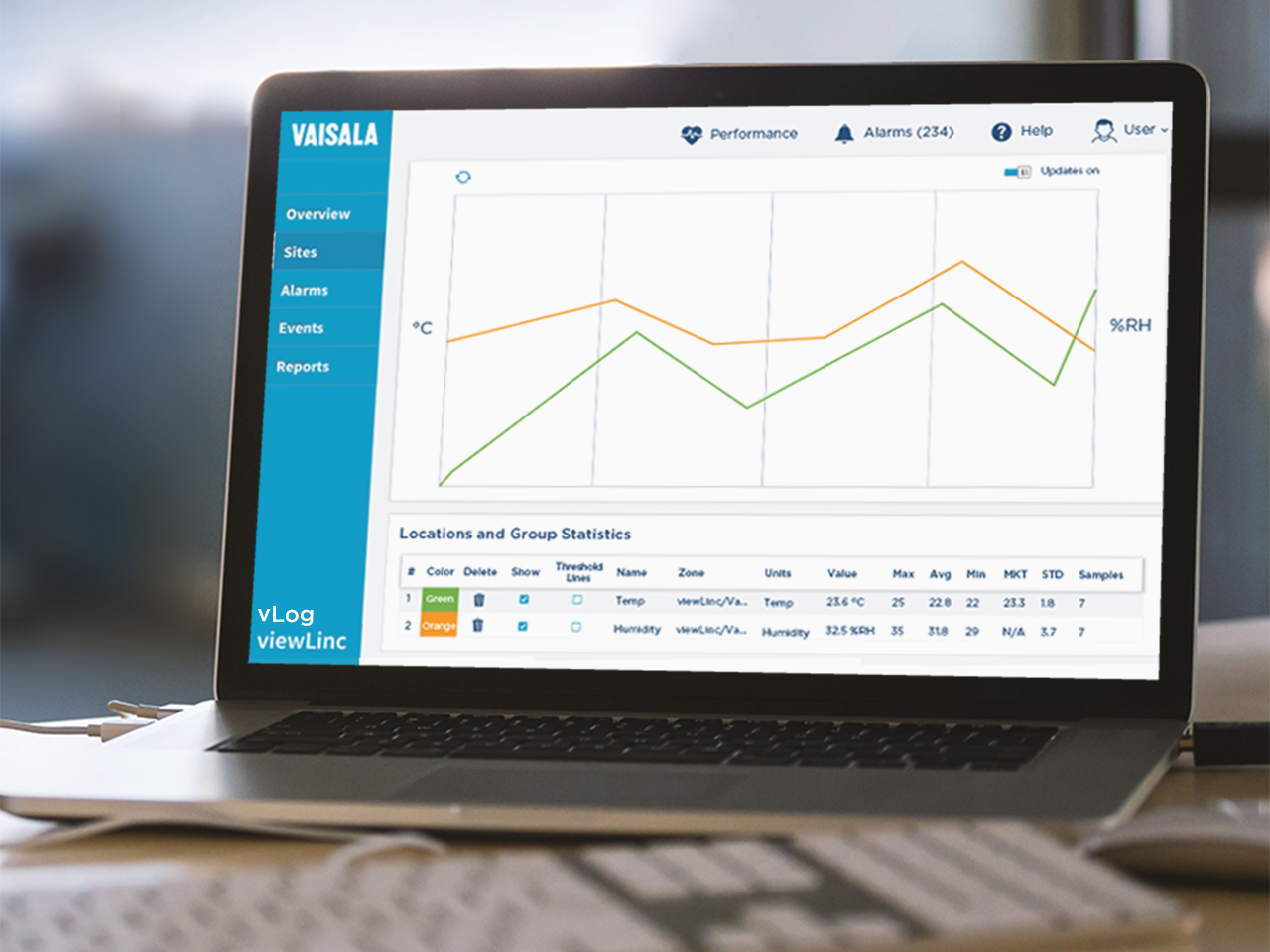
Sensors can monitor temperature, humidity, differential pressure, airflow, air velocity, particle concentration, door status, and many other parameters.
When these data are transmitted to a BMS – Building Management System, engineers can see the overall condition of the HVAC system and related equipment.
In some facilities, an EMS – Environmental Monitoring System is used to manage critical environmental parameters.
When the BMS, EMS, and equipment can exchange data, the energy strategy can go one step further.
Instead of operating equipment at fixed values, the system can respond to actual conditions.
For example, if differential pressure between two rooms is already stable at the required level, there is no need to increase fan speed simply to create pressure significantly higher than the target.
If a particle counter shows that conditions remain stable in an inactive area, the system may maintain a reduced-load mode.
If temperature starts to increase because of production-equipment heat load, the HVAC system can automatically increase cooling capacity.
This is the foundation of automation.
AI – Artificial Intelligence can take this capability to a higher level.
AI can analyze historical data to identify operating patterns and forecast demand.
If the system knows that a production line normally begins operating at 7:30 a.m., it can calculate the optimum time to move the cleanroom from setback mode back into production mode.
If AI identifies that an AHU is consuming progressively more electricity while airflow remains unchanged, the system may issue an alert related to filters, coils, or fans.
This is Predictive Maintenance.
AI may also support Predictive Control. Rather than responding only after temperature exceeds a limit, the system can anticipate an upcoming increase in thermal load and adjust in advance.
However, AI is not a mandatory requirement for saving energy.
A well-designed BMS, accurate sensors, and an effective control strategy can already produce substantial benefits.
AI becomes genuinely valuable only when the underlying data infrastructure is sufficiently reliable.
Should Energy-Efficient Cleanroom Design Begin with CAPEX or OPEX?
One reason many cleanrooms consume excessive energy is that projects are evaluated mainly on CAPEX – Capital Expenditure, or initial investment cost.
If two FFUs have the same dimensions and airflow capacity but one has a lower purchase price, the buyer may choose the cheaper unit.
However, if that FFU uses a less efficient motor, the initial saving may quickly disappear through higher electricity consumption.
This is why OPEX – Operating Expenditure must also be considered.
Cleanroom equipment may remain in operation for many years. A small difference in electrical power multiplied by thousands of operating hours every year can create a substantial cost difference.
Consider two FFUs with the same filtration performance and airflow.
One unit consumes 50 W less than the other.
With one FFU, the difference may appear insignificant.
With 1,000 FFUs, the difference becomes 50 kW.
If those units operate continuously, the annual energy difference can be substantial.
This is why Life Cycle Cost – LCC is more important than equipment purchase price alone.
LCC considers the total cost of investment, energy, maintenance, consumables, and downtime throughout the equipment's useful life.
The same principle applies to HEPA filters.
A filter with a lower purchase price but higher resistance may increase fan energy consumption for years.
An AHU that is cheaper initially but uses a low-efficiency fan may create higher OPEX.
Equipment without speed-control capability may force the system to operate at 100% output even when actual demand is lower.
Energy-efficient cleanroom design should therefore be treated as a total-cost optimization problem, not simply as a lowest-purchase-price exercise.
In a professionally designed project, CAPEX and OPEX should be considered together from the equipment-selection stage.
Sometimes a slightly higher initial investment can lead to a significantly lower total cost of ownership.
Priority Energy-Saving Measures for New and Existing Cleanrooms
For new cleanrooms, the greatest opportunity to save energy exists during the design stage.
Before the layout, HVAC, AHUs, FFUs, and control architecture are fixed, engineers can optimize the entire system rather than correcting individual problems later.
One of the first steps is to define the environmental requirements correctly.
ACH should not be set unnecessarily high simply to create a large “safety margin.”
Differential pressure should not be significantly higher than required unless there is a clear technical benefit.
Fresh-air volumes should not exceed what is needed for personnel, process requirements, or air balance.
The next priority is reducing pressure drop throughout the system.
Properly sized ductwork, well-designed fittings, optimized filter resistance, and clean coils can all reduce the pressure that fans must overcome.
Selecting high-efficiency fans and using VFDs are also important measures.
For FFU systems, EC motors and the ability to control units by group or zone can provide long-term benefits.
Heat recovery may be considered where appropriate.
Setback mode may be used during non-production periods.
Sensors and BMS platforms allow the system to respond to actual conditions.
However, good design alone is not enough.
Commissioning plays a critical role.
A well-calculated system with poor air balancing can still waste energy.
Valves may be opened too far.
Fans may run at excessive speed.
Some rooms may receive too much airflow while others receive too little.
Setpoints may be higher than necessary.
All of these issues can turn an energy-efficient design into an inefficient operating system.
For existing cleanrooms, the first step should usually be an energy audit.
There is no need to replace all equipment immediately.
The first task is to identify the largest loads and determine where the system is operating inefficiently or with excessive capacity.
Sometimes the most effective solution is not purchasing a new AHU, but simply adjusting the operating schedule, reducing an unnecessarily high setpoint, or correcting poor air balancing.
Maintenance is also directly connected to energy efficiency.
Dirty filters, dirty coils, slipping belts, inaccurate sensors, and malfunctioning dampers can all increase electricity consumption.
Energy efficiency is therefore not a one-time project.
It is a continuous management process.
Energy-Efficient Cleanrooms in Vietnam: From an ESG Trend to a Competitive Advantage
In Vietnam, cleanroom energy efficiency is becoming increasingly important as pharmaceutical, electronics, semiconductor, medical-device, food, and other high-tech industries continue to expand.
Major industrial centers such as Hanoi, Bac Ninh, Bac Giang, Hai Phong, Thai Nguyen, Da Nang, Ho Chi Minh City, Binh Duong, and Dong Nai are home to growing numbers of factories with controlled manufacturing environments.
For domestic companies, the first driver for energy efficiency is often OPEX.
Electricity is a recurring cost throughout the life of the factory. If a cleanroom is designed with excessive capacity, that unnecessary cost is repeated every month for many years.
For FDI companies and businesses participating in global supply chains, additional pressure comes from ESG requirements.
Multinational corporations are increasingly paying attention to emissions across their entire supply chains. This means suppliers may also need to demonstrate stronger capabilities in energy, carbon, and resource management.
In this context, a factory with energy-efficient cleanrooms can create two benefits simultaneously:
lower manufacturing costs and stronger alignment with international sustainability requirements.
For new projects, cleanroom contractors should incorporate energy-performance criteria into equipment selection from the beginning.
FFUs should not be evaluated only by airflow and filtration class.
HEPA filters should not be evaluated only by whether they are H13 or H14.
AHUs should not be evaluated only by rated capacity.
Equipment should also be assessed for efficiency, resistance, adjustability, and connectivity with the control system.
Within this supply chain, VCR Cleanroom Equipment supplies cleanroom equipment to cleanroom contractors and manufacturing projects in multiple industries.
Product groups such as FFUs, HEPA Boxes, HEPA filters, Pass Boxes, Air Showers, LAF units, Dispensing Booths, cleanroom doors, interlocking systems, and differential-pressure monitoring equipment can be evaluated not only according to their primary function but also according to how well they support an energy-efficient operating strategy.
This is also a direction in which Vietnam's cleanroom market will need to evolve:
from purchasing equipment based mainly on unit price to selecting equipment based on life-cycle performance.
Frequently Asked Questions About Energy-Efficient Cleanrooms
Why do cleanrooms consume so much electricity?
Cleanrooms must process large volumes of air, continuously filter it, and tightly control temperature, humidity, differential pressure, and particle concentration. HVAC systems, AHUs, FFUs, and chillers therefore operate for long periods and often carry significantly higher energy loads than conventional areas.
Is HVAC the largest energy-consuming system in a cleanroom?
In many projects, HVAC is one of the largest energy consumers because it must move, cool, dehumidify, reheat, and filter large volumes of air.
Does a higher ACH always mean a better cleanroom?
Not necessarily. ACH must be sufficient to meet cleanliness and process requirements, but increasing ACH beyond what is needed may increase energy consumption without providing a corresponding benefit.
Can ACH be reduced to save electricity?
Potentially, yes, if data and risk assessment demonstrate that the room can continue meeting its required conditions. ACH should never be reduced based only on intuition.
Can FFU speed be reduced at night?
Some systems may use setback mode during non-production periods. However, cleanliness classification, differential pressure, recovery time, and process requirements should be evaluated before implementing this strategy.
What is Setback Mode in a cleanroom?
Setback Mode is a reduced-load operating condition used when a cleanroom is not operating at full production. It may involve reducing fan speed or airflow to a previously defined safe level.
Can FFUs with EC motors save energy?
EC motors generally offer good efficiency and flexible speed control, so they can support an energy-saving strategy. Actual performance still depends on fan design, operating point, and the control system.
Does a HEPA filter affect energy consumption?
Yes. A filter creates resistance to airflow. The higher the resistance, the more pressure the fan must generate to maintain the same airflow.
Does increasing HEPA differential pressure increase fan energy consumption?
If the system is designed to maintain constant airflow, the fan may need to increase output as filter differential pressure rises. Filter condition therefore directly affects energy use.
Should a HEPA filter be replaced immediately when differential pressure rises?
Not necessarily. Filter replacement should consider technical limits, airflow, service life, actual filter condition, and the maintenance strategy of the system rather than relying on a single parameter.
How can a BMS help save cleanroom energy?
A BMS can adjust fans, temperature, airflow, and operating schedules according to actual demand instead of allowing every device to run continuously at one fixed operating condition.
Can AI optimize cleanroom energy consumption?
AI has significant potential. It can analyze operating data, forecast load, detect anomalies, and support selection of more efficient operating points. However, accurate sensor data are essential before AI can be applied effectively.
Can GMP cleanrooms use energy-saving strategies?
Yes, but any changes that affect environmental conditions must be evaluated for GMP compliance, contamination control, product quality, and appropriate validation.
Does saving energy reduce cleanroom classification?
Not if the system is optimized correctly. The objective is to eliminate unnecessary energy consumption while maintaining the required cleanliness classification and process conditions.
Can older cleanrooms be upgraded for better energy efficiency?
Yes. Possible measures include optimizing setpoints, rebalancing airflow, adding VFDs, replacing inefficient fans or FFUs, improving control systems, and introducing setback modes where appropriate.
What is the difference between CAPEX and OPEX in cleanroom investment?
CAPEX is the initial investment cost, while OPEX is the cost of operating the system throughout its useful life. Equipment with a lower CAPEX may not necessarily provide the lowest total cost if it consumes more energy or requires more maintenance.
How is ESG related to cleanrooms?
Cleanrooms consume large amounts of energy and therefore contribute to a facility's carbon footprint. Improving cleanroom efficiency can support the environmental component of a company's ESG strategy.
How does Net Zero affect cleanroom design?
When a company commits to Net Zero, major energy-consuming systems such as HVAC and cleanrooms become important targets for optimization in order to reduce indirect emissions from electricity consumption.
Which cleanroom systems have the greatest impact on electricity consumption?
AHUs, chillers, supply and return fans, FFUs, dehumidification systems, and other continuously operating equipment often have a significant impact. HEPA filters also affect energy indirectly through their pressure drop.
Where should factories in Vietnam begin when optimizing cleanroom energy consumption?
The first step should be to measure and analyze real operating data, including electrical power, airflow, ACH, differential pressure, operating hours, and HVAC load. The factory can then identify high-consumption areas or systems operating with excessive capacity before deciding on upgrades.
Selecting the Right Equipment from the Beginning for an Energy-Efficient Cleanroom
An energy-efficient cleanroom does not begin with reducing fan speed after the factory is already in operation.
True efficiency is determined during the design stage, when the company defines ACH, fresh-air volume, HVAC configuration, number of FFUs, HEPA-filter type, differential pressure, and the control system.
A device consuming only a few dozen watts more may appear insignificant when considered individually.
But in a factory with hundreds or thousands of devices operating continuously for many years, small differences in individual power consumption can become substantial OPEX.
When selecting FFUs, motor efficiency and speed-control capability should therefore be considered.
When selecting HEPA filters, both filtration efficiency and pressure drop should be evaluated.
When selecting differential-pressure monitoring systems, accuracy and connectivity should be considered.
When selecting cleanroom equipment, its ability to integrate with the BMS and the overall operating strategy should also be evaluated.
VCR Cleanroom Equipment supplies cleanroom equipment to cleanroom contractors and manufacturing facilities in the pharmaceutical, electronics, semiconductor, food, cosmetics, and medical-device industries.
Product groups include FFUs, HEPA Boxes, HEPA filters, Pass Boxes, Air Showers, LAF units, Dispensing Booths, cleanroom doors, interlocking systems, and differential-pressure monitoring equipment, all of which can be selected according to the specific technical requirements of each project.
In the ESG era, the criteria for selecting cleanroom equipment therefore need to move from:
“meeting the requirement at the lowest initial investment cost”
to:
“meeting the requirement at the optimum total life-cycle cost.”
A sustainable cleanroom is not the cleanroom that uses the least electricity.
It is the cleanroom that uses the right amount of energy required to maintain cleanliness, control the environment, protect the product, and ensure stable manufacturing throughout the life cycle of the facility.
DAP