- Cleanrooms Are Entering the Era of Intelligent Operations
- AI Will Become the Analytical “Brain” of the Cleanroom
- How Can AI Change Environmental Control and Contamination Detection?
- Which Cleanroom Tasks Could Robots Take Over from Humans?
- AI and Robotics Will Change How Cleanroom Equipment Is Operated
- From Scheduled Maintenance to Predictive Maintenance
- Digital Twins Will Create a “Virtual Copy” of the Cleanroom
- AI Can Help Cleanrooms Save Energy While Maintaining Cleanliness
- Challenges of Introducing AI and Robotics into Cleanrooms in Vietnam
- Cleanrooms in the Next 5–10 Years: Humans, AI, and Robots Will Work Together
- Frequently Asked Questions About AI and Robotics in Cleanrooms
- Can AI completely replace cleanroom operators?
- Can robots reduce contamination risks in cleanrooms?
- Can an existing cleanroom be upgraded for AI-based operation?
- Can AI predict when a HEPA filter should be replaced?
- Can robots operate in an ISO Class 5 cleanroom?
- Is AI suitable for GMP manufacturing facilities?
- What is a Digital Twin in a cleanroom?
- Which cleanroom devices have the potential to connect with AI?
- Can AI help reduce cleanroom operating costs?
- Where should Vietnamese companies begin when automating cleanrooms?
- Preparing Cleanroom Equipment Infrastructure for Smart Operations
Cleanrooms are environments built around the principle of control. From airborne particle concentration, temperature, humidity, and differential pressure to airflow direction, door status, and human activity, most parameters must be maintained within defined limits. For decades, this control has primarily relied on HVAC systems, cleanroom equipment, sensors, standard operating procedures, and the experience of operating personnel.
But this operating model is beginning to change.
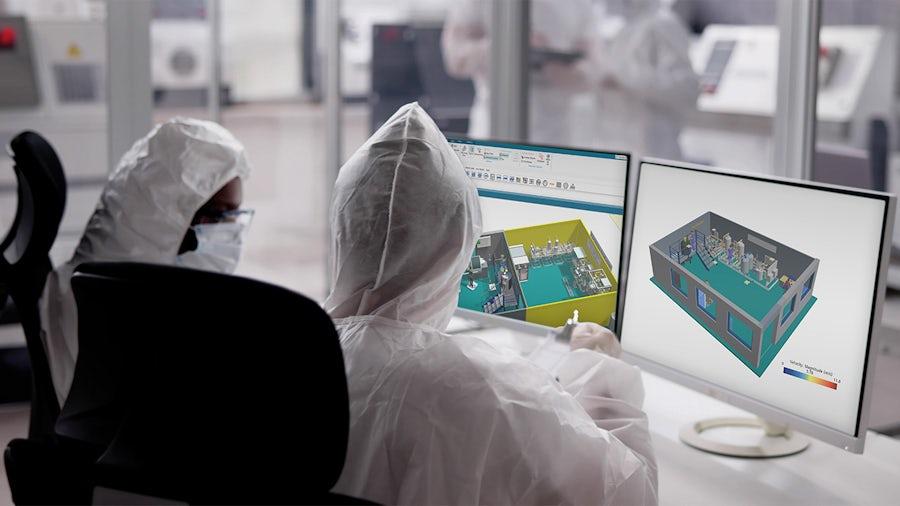
The development of AI – Artificial Intelligence, robotics, smart sensors, IoT – Internet of Things, and data analytics platforms is opening the door to a new cleanroom model. Instead of simply recording what has already happened, systems can identify trends, detect anomalies, predict potential failures, and even adjust certain parameters before environmental conditions move outside the controlled range.
In the future, a cleanroom will no longer be simply a space equipped with HEPA filters, AHUs, FFUs, and contamination-control equipment. It can become an operating system capable of continuously observing, analyzing, and responding based on data.
This is particularly important for pharmaceutical, food, cosmetics, medical device, electronics, semiconductor, and biotechnology manufacturing facilities in Vietnam, where requirements for quality, data traceability, energy efficiency, and process stability are becoming increasingly demanding.
Cleanrooms Are Entering the Era of Intelligent Operations
Traditional cleanrooms are designed around a fairly straightforward principle: creating an environment with a higher level of control than the surrounding environment. To achieve this, the system must control contamination sources, filter the air, maintain differential pressure, regulate temperature and humidity, and limit particle generation from both people and production equipment.
In traditional operating models, however, many decisions still depend heavily on people.
Operators check differential pressure gauges. Technicians monitor fan conditions. Maintenance teams inspect pressure drops across HEPA filters. Quality personnel review data from particle counters. When an alarm occurs, the relevant teams begin investigating the cause.
This model can work effectively, but it has one obvious limitation: most actions are reactive.
A parameter first exceeds its limit, and only then do people respond.
AI is beginning to change this logic.
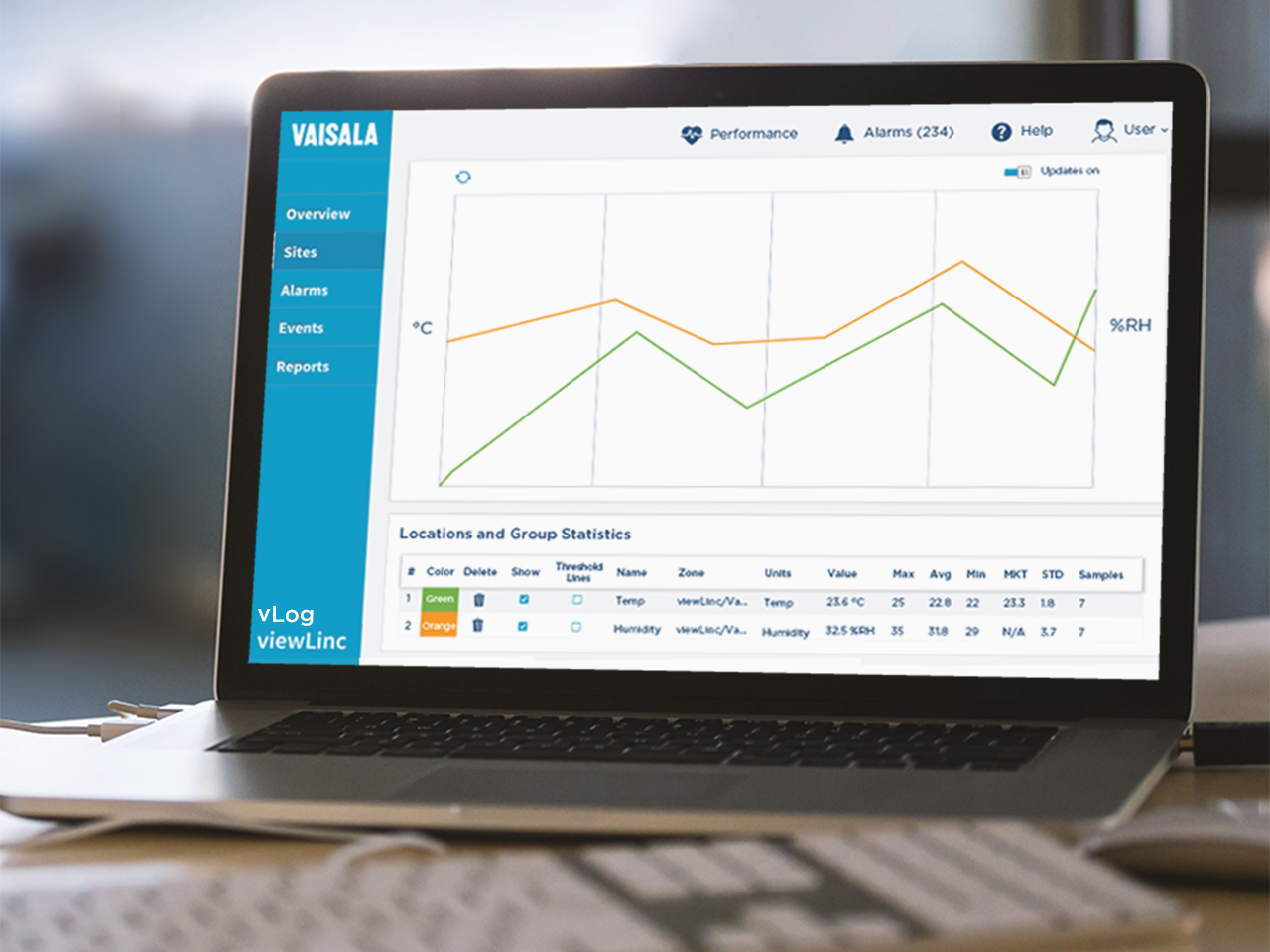
When data from pressure, temperature, humidity, air velocity, particle concentration, door-status, motor-current, and HVAC sensors are collected continuously, the system can analyze how these values change over time. Instead of asking only, “Has the parameter exceeded its limit?”, AI can ask a more important question: “Where is the system trending?”
This is the foundation of the Smart Cleanroom.
A smart cleanroom does not necessarily need robots in every location. The more important difference is the ability to connect data across multiple systems.
An FFU is no longer merely a clean-air supply device.
A Pass Box is no longer merely a transfer chamber.
An interlocked door is no longer simply a locking system.
A particle counter is no longer just an instrument for measuring airborne particles.
When these devices are connected to a central management system, each one becomes a data-generating point. When sufficient high-quality data are available, AI can use them to understand the actual operating condition of the cleanroom.
For factories in Hanoi, Bac Ninh, Bac Giang, Hai Phong, Thai Nguyen, Da Nang, Ho Chi Minh City, Binh Duong, and Dong Nai, this can be highly significant. Many manufacturing facilities are trying to solve three challenges at the same time: maintaining a stable environment, reducing operating costs, and improving data traceability.
AI and automation can help connect these three requirements within a single operating architecture.
However, it is important to understand that AI does not replace the fundamental principles of cleanroom engineering. ISO 14644, GMP, contamination control strategies, HVAC design, personnel flow, material flow, and operating behavior remain the foundation.
AI becomes genuinely useful only when those foundations have been designed correctly.
AI Will Become the Analytical “Brain” of the Cleanroom
A modern cleanroom can generate a very large amount of data.
Sensors record temperature and humidity. Gauges or transmitters measure differential pressure between areas. Particle counters monitor airborne particle concentrations. FFU controllers record fan speed. AHUs generate data on airflow, coil conditions, filter pressure drops, and motor current.
When each parameter is viewed independently, it can be difficult for people to recognize the relationships between them.
AI has an advantage because it can analyze multiple variables simultaneously.
For example, differential pressure between two rooms may gradually decline over several days while still remaining above the alarm limit. If the system is evaluated only against fixed threshold values, everything may still appear normal.
But if AI simultaneously detects increasing fan speed, rising filter differential pressure, and decreasing airflow, it may recognize that an abnormal trend is developing.
This illustrates the difference between monitoring and analysis.
Monitoring answers the question: What condition is the system in right now?
Analytics answers the question: Why is this condition occurring?
Predictive Analytics goes one step further: What is likely to happen next?
One of the technologies supporting this process is Machine Learning.
Machine learning enables systems to recognize recurring patterns in data. After a period of operation, the system can begin to understand what “normal” looks like for each area.
For example, a production room may normally maintain a differential pressure of approximately 15 Pa. When the door opens, the pressure drops for a few seconds and then recovers. That is normal behavior.
But if the pressure begins taking longer than usual to recover after the door closes, AI may identify the change even though the final pressure value still remains within the acceptable range.
This is a simple example of Anomaly Detection.
As data are continuously analyzed, the cleanroom begins to develop a kind of “operational fingerprint.” Each AHU, FFU, room, Pass Box, or production area has its own operating characteristics.
AI does not necessarily need to compare every device with one universal value. It can compare each device with its own operating history.
This can be particularly useful in facilities with hundreds of FFUs or many separate cleanroom zones.
It is extremely difficult for people to follow every small trend continuously.
AI can do this around the clock.
However, a system is only as intelligent as the data it receives. If sensors are inaccurate, installed in unsuitable locations, or generating incomplete data, AI can produce incorrect conclusions.
For that reason, when developing a smart cleanroom, companies should begin with the measurement infrastructure, not with AI.
How Can AI Change Environmental Control and Contamination Detection?
One of the most promising applications of AI in cleanrooms is environmental control.
In traditional systems, parameters are typically assigned alert limits and action limits. When a parameter exceeds a predefined threshold, the system generates an alarm.
This is a threshold-based approach.
AI enables a transition toward a trend-based approach.
Consider a particle counter.
If the particle limit has not yet been exceeded, a conventional system may generate no alarm. However, if particle concentration gradually increases across several production cycles, this may indicate that something in the system is changing.
The cause could be personnel behavior, filter condition, cleaning practices, a layout change, or the installation of new production equipment.
AI can combine particle data with other types of information.
For example, particle levels may rise sharply immediately after a particular door is opened.
Or particle concentration may increase whenever the number of people in the room exceeds a certain level.
Or particle levels may rise when a robot begins moving along a particular route.
In these cases, the system does not merely know that “particle levels increased.” It can begin to identify relationships between events and environmental changes.
This is an important step forward.
In pharmaceutical cleanrooms, the ability to analyze environmental data over time can also provide valuable support for a Contamination Control Strategy.
AI may help identify recurring patterns that are difficult for people to detect when reviewing individual reports separately.
Differential pressure provides another example.
If two rooms are designed as part of a pressure cascade, AI can monitor recovery time after a door opens, door-opening frequency, and the stability of differential pressure.
If recovery time gradually becomes longer, it may indicate a change in airflow or room tightness.
Similarly, for temperature and humidity, AI can identify small changes associated with heat load, personnel occupancy, or production status.
Another important concept in the future of cleanrooms is Real-Time Monitoring.
Instead of reviewing data at the end of a shift or the end of the day, systems can analyze information as soon as it is generated.
This is particularly valuable in highly controlled areas.
When connected with a BMS – Building Management System or an EMS – Environmental Monitoring System, AI can function as an analytical layer above the control and monitoring systems.
The BMS manages equipment.
The EMS monitors the environment.
AI analyzes the relationship between the two.
In the future, the greatest value will not come from having the largest number of sensors, but from being able to understand the data those sensors generate.
Which Cleanroom Tasks Could Robots Take Over from Humans?
In a cleanroom, people are both operators and one of the most significant contamination sources that must be carefully controlled.
The human body continuously generates particles through skin, hair, clothing, and movement. Walking, performing manual operations, opening doors, and moving materials can disturb airflow and disperse particles.
For this reason, one of the key principles of clean-process design is to reduce unnecessary human intervention.
Robots are well suited to this objective.
A robot does not breathe, shed hair, or generate particles in the same way that a person does. However, this does not mean that a robot is contamination-free. Motors, bearings, wheels, cables, surface materials, and mechanical movement can all generate particles if the equipment is not properly designed.
Robots intended for cleanroom use therefore need to be specifically designed for controlled environments.
One common application is material transportation.
An AGV – Automated Guided Vehicle can move along a predefined route.
An AMR – Autonomous Mobile Robot, by contrast, can perceive its surroundings and plan routes more flexibly.
Inside a factory, AMRs can transport raw materials from preparation areas to production areas, move trays of products between process stages, or transfer supplies between different zones.
This reduces the amount of personnel movement required.
Robots can also assist with material feeding, packaging, sampling, and other repetitive operations.
In the electronics and semiconductor industries, robots have already become important components of many clean manufacturing lines. As cleanliness requirements become more stringent, reducing the number of people directly present in the production area can provide a significant advantage.
In pharmaceutical manufacturing, robots may also support operations that require high precision and strict contamination control.
Another area of development is robotic cleaning.
Cleanroom cleaning still requires substantial labor. It is highly repetitive work, yet it has a direct impact on contamination control.
In the future, robots may perform part of the floor-cleaning work or clean certain standardized surfaces.
However, robotics does not mean eliminating people entirely.
Tasks that require situational assessment, decision-making, quality approval, or incident response will continue to require qualified personnel.
A more realistic model is one in which robots handle repetitive, high-frequency tasks or activities associated with a greater contamination risk.
People can then focus on work that requires judgment.
AI and Robotics Will Change How Cleanroom Equipment Is Operated
The impact of AI will not be limited to the system level. It will also change the way individual cleanroom devices are operated.
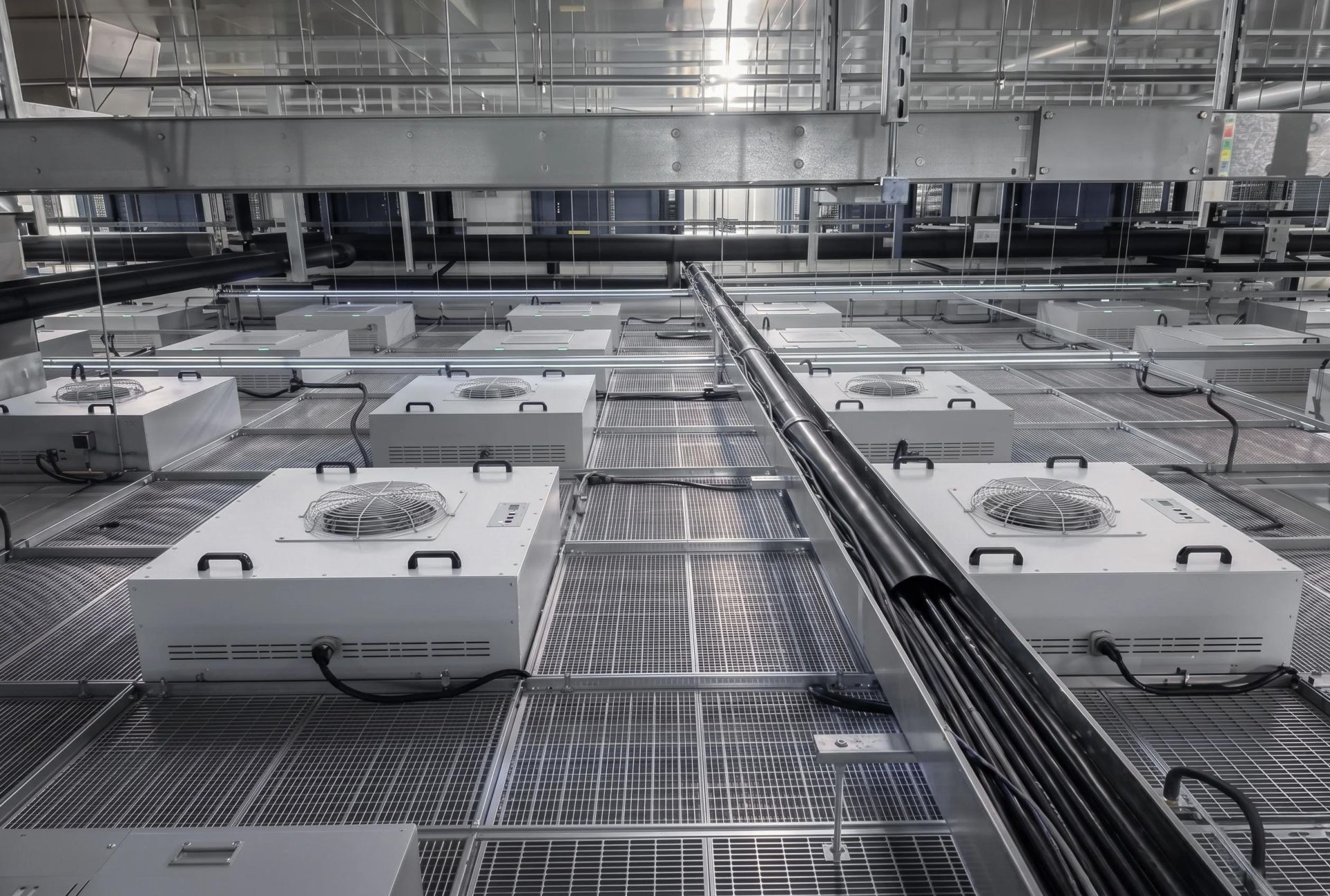
An FFU – Fan Filter Unit is a good example.
In many systems today, FFUs run at fixed speeds or are adjusted manually.
In an intelligent system, FFU speed could be adjusted according to pressure, room utilization, or production status.
When no production is taking place, the system could switch to an energy-saving mode.
When production begins, FFU speed could increase to maintain the required environmental conditions.
This is a form of Demand-Based Control.
Pass Boxes may also evolve.
A traditional Pass Box primarily controls door opening between two areas.
In future systems, a Pass Box could record door-opening duration, user identity, the number of transfers, UV cycles where applicable, and cleaning status.
These data could be connected to a material-management system.
A Dynamic Pass Box could provide additional information on fan condition, differential pressure, and filter status.
AI could monitor these parameters to detect abnormal trends.
An Air Shower could also become a connected data source.
The system could monitor blowing time, usage frequency, door condition, fan status, and filter differential pressure.
If motor current changes or air velocity gradually decreases, the system could issue an early maintenance warning.
LAF – Laminar Air Flow units, Dispensing Booths, and Sampling Booths could also be connected to a central monitoring system.
For cleanroom contractors, this trend creates new requirements for equipment.
Equipment will no longer need to meet only mechanical requirements and filtration-performance specifications.
It will also need connectivity.
In this context, cleanroom equipment suppliers such as VCR Cleanroom Equipment, which provides FFUs, Pass Boxes, Air Showers, LAF units, Dispensing Booths, HEPA Boxes, interlocked doors, and many other cleanroom products to cleanroom contractors, will increasingly need to pay attention to sensor integration, control signals, and communication with BMS or EMS platforms.
The meaning of “cleanroom equipment” is therefore also changing.
The future is not only about electromechanical equipment.
It is about equipment that generates data.
From Scheduled Maintenance to Predictive Maintenance
Traditional maintenance is usually time-based.
A device is inspected every month.
Filters are checked on a fixed schedule.
A motor is serviced after a certain number of operating hours.
This approach is simple, but it does not fully reflect the actual condition of equipment.
One motor may continue operating reliably well beyond its planned maintenance interval.
Another may begin deteriorating before the scheduled maintenance date.
Predictive Maintenance uses data to estimate when a device is genuinely at risk of developing a problem.
For example, AI can monitor the electrical current drawn by an FFU motor.
If current consumption gradually rises while airflow decreases, the system may determine that the fan is working harder.
If the filter differential pressure is rising at the same time, increasing dust loading on the filter may be one possible explanation.
AI does not necessarily make the decision to replace the filter immediately.
Instead, it provides information that helps technicians make a better assessment.
Similarly, an AHU can be monitored using vibration, electrical current, motor temperature, airflow, and filter differential pressure.
If one parameter begins deviating from its normal operating pattern, the system can issue an early warning.
One of the main strengths of predictive maintenance is its potential to reduce Downtime.
In pharmaceutical, electronics, or semiconductor facilities, an HVAC failure can affect multiple production areas.
If the problem is only discovered after the system stops, the cost may be significant.
If the issue is detected days or weeks earlier, maintenance can be planned proactively.
AI may also help evaluate HEPA filter service life.
Differential pressure remains an important indicator, but it does not need to be the only indicator.
The rate at which differential pressure increases over time, operating hours, dust loading, production mode, and fan condition can all be analyzed together.
The system can then forecast a trend rather than simply waiting for differential pressure to reach an alarm limit.
This moves companies closer to Condition-Based Maintenance.
Equipment is maintained because its actual condition indicates that maintenance is needed, rather than simply because the calendar says it is time.
Digital Twins Will Create a “Virtual Copy” of the Cleanroom
One of the most important concepts in the future of cleanrooms is the Digital Twin.
In simple terms, a Digital Twin is a digital representation of a physical system.
In a cleanroom, a Digital Twin could reflect the operating status of AHUs, FFUs, temperature, humidity, pressure, particle concentration, door status, and production activity.
As the physical cleanroom changes, the Digital Twin is updated as well.
One of the greatest advantages of a Digital Twin is the ability to test scenarios before making changes to the real system.
For example, a factory may want to reduce FFU speed at night to save energy.
If this is done directly on the real system, management may be concerned about the effect on cleanliness classification.
With a Digital Twin, the scenario can first be simulated.
A factory that wants to relocate production equipment could also evaluate how the change may affect airflow.
In this case, the Digital Twin could be combined with CFD – Computational Fluid Dynamics.
CFD helps simulate the movement of air.
AI analyzes real operating data.
The Digital Twin connects the model to the live operating system.
These three technologies can complement one another.
For example, CFD may predict that a particular location has a risk of developing recirculation or turbulent zones.
After the factory begins operating, sensor data and particle-counter measurements may show that particle levels in the same area are higher than normal.
AI can compare actual data with the model.
As more data become available, the Digital Twin can increasingly reflect the real system more accurately.
This concept is particularly valuable for large manufacturing facilities.
In areas with hundreds of FFUs, multiple AHUs, and dozens of rooms, evaluating system changes based purely on experience can be very difficult.
A Digital Twin provides a digital testing environment.
In the future, before changing layouts, fan speeds, or pressure strategies, engineers may be able to run multiple scenarios in the model.
This does not eliminate validation.
But it can provide a stronger data foundation for engineering decisions.
AI Can Help Cleanrooms Save Energy While Maintaining Cleanliness
Energy is one of the major challenges in cleanroom operations.
Cleanrooms require large volumes of conditioned air.
AHU fans may need to operate continuously.
FFUs can run for thousands of hours every year.
Temperature and humidity often have to be maintained within relatively narrow ranges.
If the same operating mode is used at all times, energy consumption can be very high.
AI can help the system operate more flexibly.
For example, a production area that is not being used at night may not need to maintain the same airflow rate as during full production, provided that the contamination-control strategy and quality requirements allow it.
The system may use a Setback Mode.
Fan speed is reduced.
Airflow is reduced.
Before production resumes, the system returns to its normal operating condition.
The difficult question is determining how far the system can safely be reduced.
AI can use historical data to identify an optimal operating range.
If FFU speed is lowered while particle concentration remains stable and recovery time remains acceptable, the system may continue operating in the energy-saving mode.
If environmental performance begins to deteriorate, the system can adjust.
This is where Energy Efficiency meets Contamination Control.
A cleanroom should never save energy by sacrificing contamination control.
The objective of AI is to identify an operating point at which both requirements can be satisfied.
This is particularly important for large electronics, semiconductor, pharmaceutical, and medical-device factories.
In industrial areas in Bac Ninh, Bac Giang, Hai Phong, Hanoi, Thai Nguyen, Binh Duong, Dong Nai, and Ho Chi Minh City, energy costs can represent a significant component of cleanroom OPEX – Operating Expenditure.
A small improvement in fan efficiency can create substantial savings when multiplied across hundreds of devices and thousands of operating hours.
That is why AI can create measurable economic value, not just technological value.
Challenges of Introducing AI and Robotics into Cleanrooms in Vietnam
AI and robotics offer many opportunities, but implementation in the real world is not simple.
The first challenge is data.
Many factories have modern equipment, but their data remain fragmented across separate systems.
The AHU is managed through the BMS.
The particle counter is connected to the EMS.
FFUs may have their own controllers.
Pass Boxes may operate independently.
Some sensors may provide only local displays.
When these data sources cannot communicate with one another, it becomes very difficult for AI to analyze the whole system.
The second challenge is data quality.
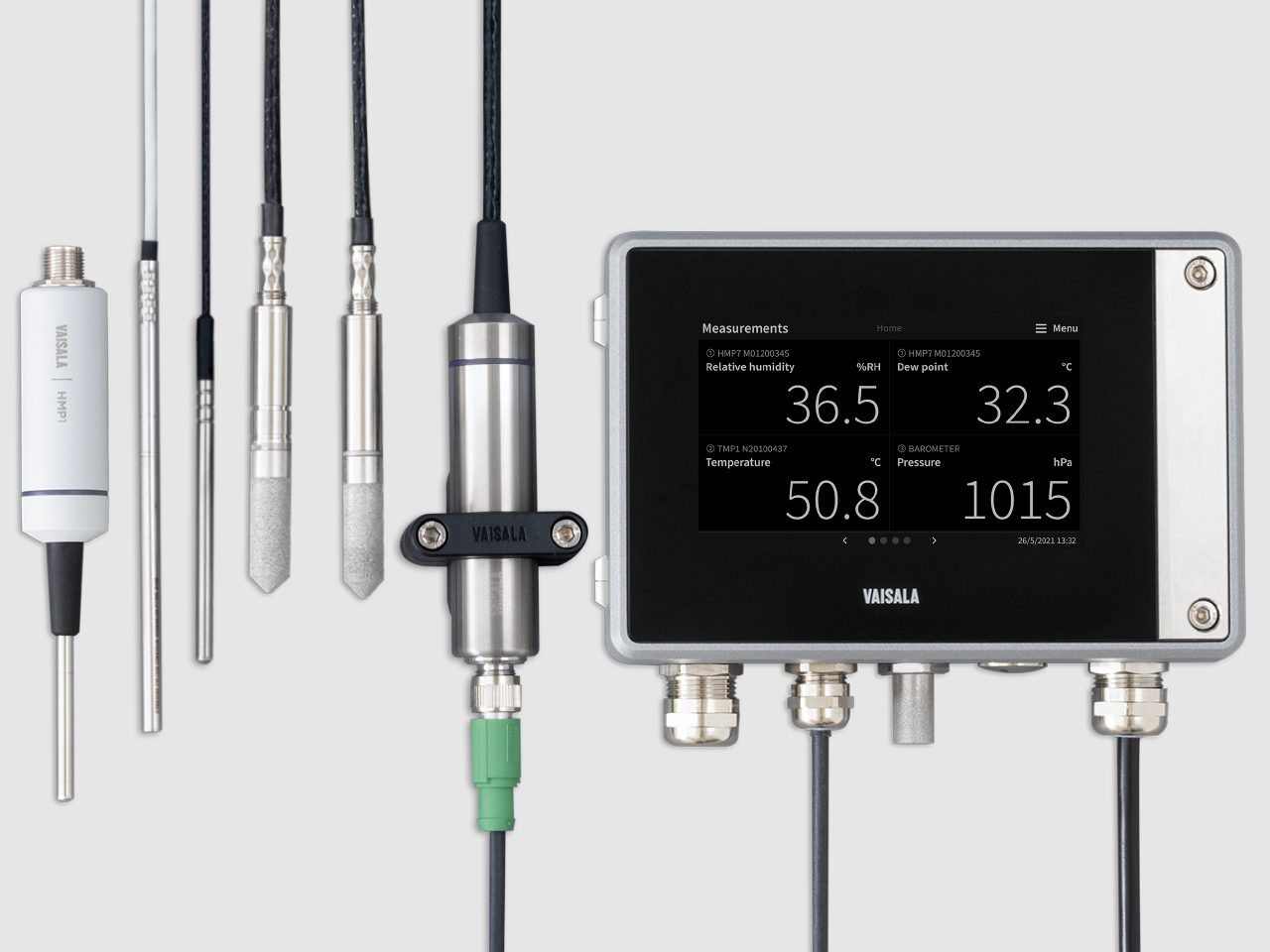
An inaccurate sensor can generate inaccurate data.
If AI uses those data, its conclusions will also be unreliable.
The principle of “garbage in, garbage out” applies directly: poor-quality input data lead to poor-quality output.
For that reason, calibration, sensor positioning, measurement accuracy, and maintenance of the measurement system remain fundamental.
Another challenge is Data Integrity.
In pharmaceutical manufacturing and other highly regulated industries, data must be traceable.
Who changed the data?
When was the change made?
What were the values before and after the change?
If AI is allowed to make decisions that affect system control, the logic behind those decisions must also be controlled.
Cybersecurity presents another concern.
As cleanrooms, BMS platforms, EMS systems, robots, and equipment become interconnected, the production environment becomes a digital network.
Protecting the OT – Operational Technology network therefore becomes increasingly important.
Another challenge in Vietnam is integration capability.
Buying a robot is relatively easy.
Purchasing an AI software platform is also not particularly difficult.
The hardest part is integrating these technologies into the actual manufacturing process.
Companies need to understand URS – User Requirement Specification, production processes, HVAC, cleanroom engineering, automation, and validation.
If any of these capabilities are missing, the result may simply be a collection of advanced technology that fails to create real operational value.
Factories therefore should not begin by asking:
“Which AI solution is the best?”
A better question is:
“Which operational problem are we trying to solve?”
If the problem is high energy consumption, begin with energy data.
If the problem is frequent differential-pressure alarms, analyze the pressure cascade.
If the problem is recurring FFU failures, begin by monitoring fan data.
AI is a tool.
The operational problem should be the starting point.
Cleanrooms in the Next 5–10 Years: Humans, AI, and Robots Will Work Together
Cleanrooms of the future are likely to become less dependent on manual operations.
Sensors will generate data.
AI will analyze the data.
Robots will perform repetitive tasks.
BMS and EMS platforms will control and monitor the environment.
People will shift from “walking around and checking each piece of equipment” toward supervising the system, evaluating data, and responding to exceptional situations.
This represents a major change in mindset.
Future cleanroom personnel will need to understand more than HVAC and equipment.
They will also need to understand data.
Maintenance engineers will not simply look at differential pressure gauges.
They will study trends.
QA personnel will not only review end-of-shift reports.
They may analyze system behavior over time.
Operators will no longer respond only after an alarm appears.
They may receive early warnings before a failure occurs.
The ultimate objective is not to create a completely human-free cleanroom.
The objective is to create a system in which people intervene at the right time, in the right place, and with better information.
Frequently Asked Questions About AI and Robotics in Cleanrooms
Can AI completely replace cleanroom operators?
That is not currently the primary objective of AI in cleanrooms. AI is better suited to data analysis, anomaly detection, trend prediction, and decision support. People remain essential for quality assessment, abnormal-event handling, process changes, and decisions that involve professional responsibility.
Can robots reduce contamination risks in cleanrooms?
They can, provided the robots are designed for the required cleanliness level and are properly controlled. Reducing the number of people moving through a clean area can reduce an important particle source. However, robots themselves may generate particles from motors, wheels, bearings, cables, and moving components if the wrong equipment is selected.
Can an existing cleanroom be upgraded for AI-based operation?
In many cases, yes. The first step is usually not to replace all existing equipment, but to assess whether the current system can generate usable data. If sensors, the BMS, the EMS, and equipment can provide reliable data, companies can build an analytical layer above the existing infrastructure.
Can AI predict when a HEPA filter should be replaced?
AI can support forecasting by analyzing differential pressure, the rate of differential-pressure increase, operating time, airflow, fan condition, and other parameters. However, the decision to replace a HEPA filter must still be based on technical requirements, actual filter condition, and the management procedures of each facility.
Can robots operate in an ISO Class 5 cleanroom?
Yes, robots are available that are specifically designed for high-cleanliness environments. However, the robot design, surface materials, drive system, particle generation, and production-process requirements should all be evaluated before installation.
Is AI suitable for GMP manufacturing facilities?
AI can be used as a supporting tool if the system is appropriately designed, managed, and validated. In GMP environments, data traceability, change control, validation, and Data Integrity must be considered from the beginning.
What is a Digital Twin in a cleanroom?
A Digital Twin is a digital model that reflects the condition of a physical cleanroom system. It can use data from HVAC systems, sensors, and cleanroom equipment to simulate, analyze, or test operating scenarios.
Which cleanroom devices have the potential to connect with AI?
FFUs, AHUs, Dynamic Pass Boxes, Air Showers, LAF units, Dispensing Booths, interlocked doors, particle counters, differential-pressure sensors, temperature sensors, humidity sensors, and many other devices can become data sources if they are appropriately designed and connected.
Can AI help reduce cleanroom operating costs?
There is significant potential, particularly through energy optimization, predictive maintenance, reduced downtime, and early anomaly detection. However, the actual benefit will depend on factory scale, data quality, and system-integration capability.
Where should Vietnamese companies begin when automating cleanrooms?
They should begin with a specific operational problem rather than attempting to deploy AI across the entire factory immediately. A suitable approach is to select an area with reliable data, define KPIs – Key Performance Indicators, implement a pilot project, and then expand if the results demonstrate value.
Preparing Cleanroom Equipment Infrastructure for Smart Operations
AI and robotics will not replace the fundamental principles of cleanroom engineering. On the contrary, they make those foundations even more important.
For a system to analyze accurately, it must first receive accurate data.
Accurate data require suitable sensors.
Stable system control requires FFUs, AHUs, Pass Boxes, Air Showers, LAF units, Dispensing Booths, HEPA Boxes, HEPA filters, interlocked doors, and related equipment to be properly selected from the design stage.
This is also why cleanroom contractors increasingly need to consider connectivity and automation capability when selecting equipment, rather than evaluating only dimensions, materials, or initial purchase price.
VCR Cleanroom Equipment supplies cleanroom equipment to cleanroom contractors and manufacturing facilities in sectors including pharmaceuticals, food, cosmetics, electronics, semiconductors, medical devices, and other high-tech industries. Product groups can include FFUs, Pass Boxes, Dynamic Pass Boxes, Air Showers, LAF units, Dispensing Booths, HEPA Boxes, HEPA filters, cleanroom doors, interlocking systems, and other equipment used for environmental control.
As the Smart Cleanroom trend continues to develop, the value of cleanroom equipment will no longer lie only in its ability to create a clean environment. Its value will increasingly include the ability to generate data, connect to control systems, and function as part of the factory’s digital operating architecture.
Companies that are building new cleanrooms or upgrading existing ones should therefore consider automation readiness from the design stage. A good equipment-selection decision made today may determine how ready a facility is for AI, robotics, and smart manufacturing for many years to come.
VCR Cleanroom Equipment – supplying cleanroom equipment to cleanroom contractors, with a focus on stable operation, system integration, and readiness for the future of automation.
DAP